भाकृअनुप - केन्द्रीय कृषि अभियांत्रिकी संस्थान, भोपाल
ICAR - Central Institute of Agricultural Engineering, Bhopal
AICRP on Mechanization of Animal Husbandry (MAH)
About AICRP
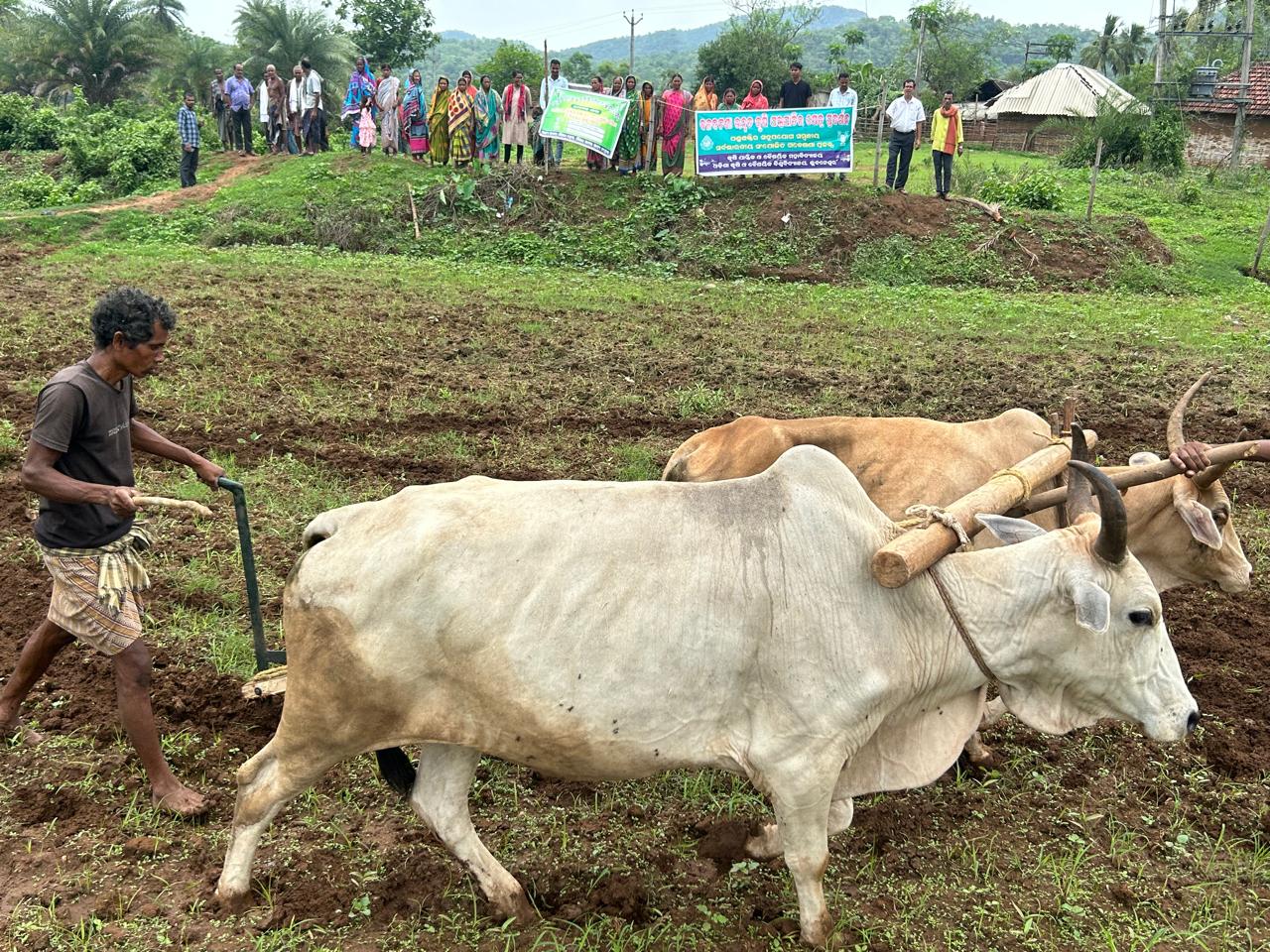
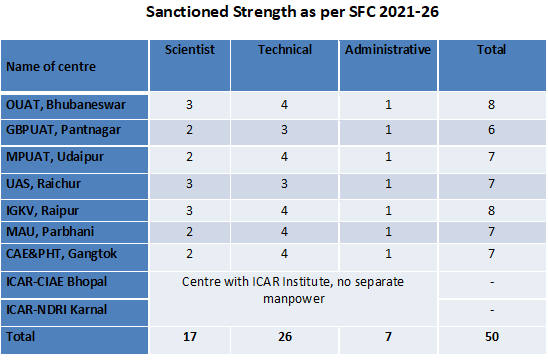
To increase the utilization of draught animal power and to study different aspects scientifically, the ICAR sanctioned an ad-hoc coordinated project on "Increased AICRP on Mechanization of Animal Husbandry (MAH)" in 1985, which became a regular All India Coordinated Research Project of ICAR from July 1987. As per SFC 2021-26, the scheme is renamed to All India Coordinated Research Project on Mechanization of Animal Husbandry (MAH) with the Coordinating Cell at ICAR-CIAE, Bhopal vide No. 13-34/2012-Rectt/UAE E-file-261798 dated 01.07.2024 and nine Cooperating Centers located at ICAR-CIAE Bhopal (Madhya Pradesh), MPUAT Udaipur (Rajasthan), GBPUAT Pantnagar (Uttarakhand), UAS Raichur (Karnataka), VNMAU Parbhani (Maharashtra), IGKV Raipur (Chhatisgarh), OUAT Bhubaneswar (Odisha), ICAR-NDR Karnal (Haryana) and CAU-CAEPHT Gangtok (Sikkim).
Mandate/Major programme/Mission
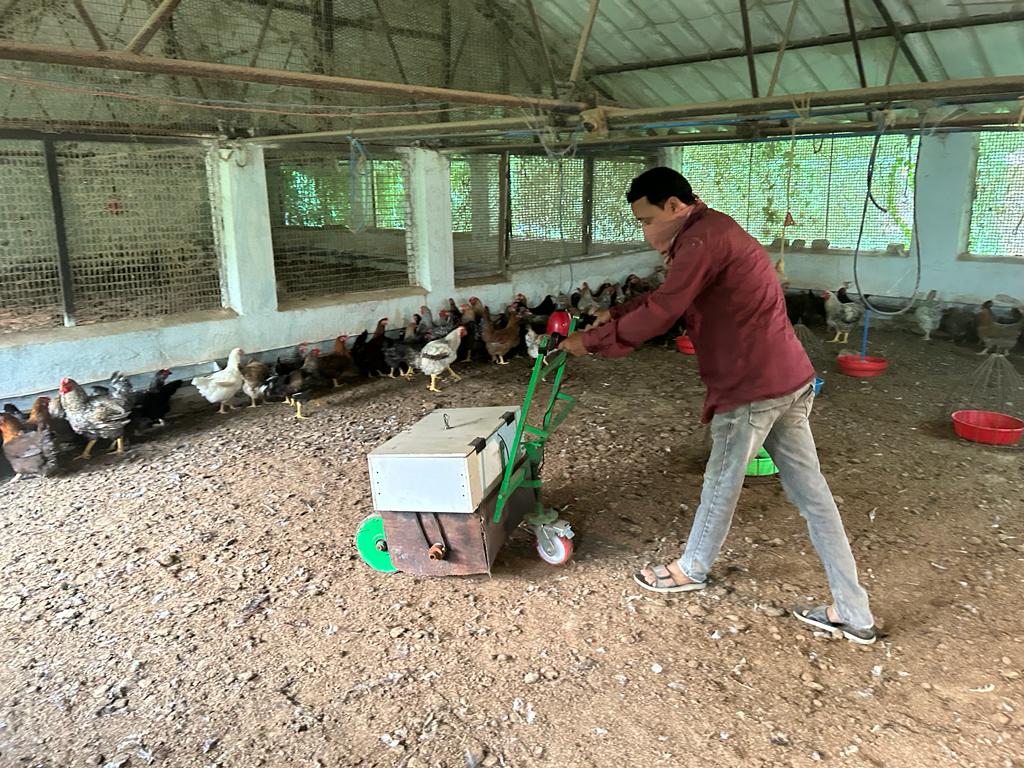
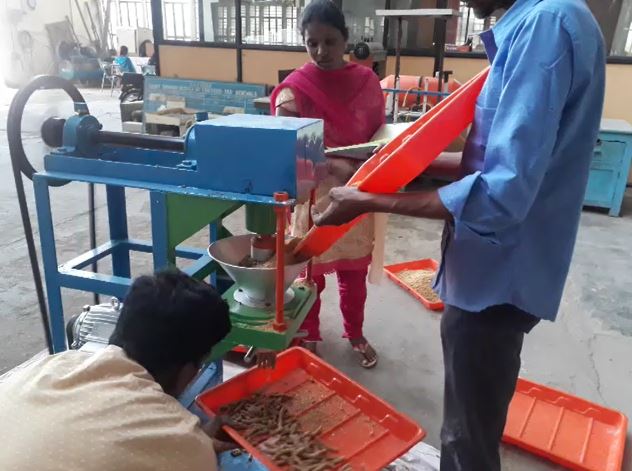
To mechanize feeding, watering, manure handling, milking etc. operations for dairy and livestock animals for better productivity and reduce cost and drudgery during their management. It will also include improved housing, sanitation and health control measures for better environment for livestock.


Objectives
The objectives of AICRP on Harnessing Animal Energy System to Increase Profitability of Small Farms (AES) during SFC period 2017-20 are as follows:
- To develop equipment and machinery for making animal feeds, milking, waste handling and watering system for livestock animals.
- To develop improved housing and sanitation systems for a conducive environment for animals.
- To develop appropriate tools and equipment for harnessing the draught power of the animals for hilly areas and small farms.
- To conduct feasibility testing (PFT) of prototypes in different agro-climatic region/ animal-based systems.
- To create awareness among various stakeholders through capacity building and frontline demonstration of technologies.
Thrust Area
- Hill mechanization.
- Small farm mechanization through animal power.
- Improved housing, sanitation and health control measures for working and non-working animals.
- Precision livestock farming using AI, IoT and sensors
- Energy efficient, nutritionally balanced animal feed to enhance energy output.
- Popularization of animal energy technologies through Front line demonstration, Village Saturation Programme and development of Technology.
Contact Us
Dr. Shiv Pratap Singh
Project CoordinatorICAR-Central Institute of Agricultural Engineering,
Nabibagh, Berasia Road, Bhopal – 462 038
Phone: 0755-2734731,2521172
Mob: (+91)9425650815
shiv.singh6@icar.gov.in, aircponuae@gmail.com
List of centres
| S. No. | Name of Centre | Principal Investigator & Location | Phone,
Fax No., E-mail address |
|||
|---|---|---|---|---|---|---|
| 1. | ICAR-CIAE, Bhopal | Dr. U.C. Dubey Principal Scientist & PI (AICRP on MAH), ICAR- Central Institute of Agricultural Engineering, NabiBagh, Berasia Road, Bhopal – 462038 |
9926615159 (M), 0755 – 2521136 (O), 0755 – 2734016 (F) E-mail: ucdubey1967[at]gmail[dot]co m |
|||
| 2. | GBPUA&T, Pantnagar | Dr.Jayant Singh Professor & PI (AICRP on MAH), Department of Farm Machinery and Power Engineering,College of Technology, Govind Ballabh Pant University of Agriculture and Technology Pantnagar – 263145 |
05944 – 234475 (O), 05944 – 233473, 233360 (F),09410514942 (M) E-mail: jayantsingh07[at]gmail[dot]com |
|||
| 3. | MPUAT Udaipur | Dr. Sanwal Singh Meena Professor & Head PI (AICRP on MAH), Department of Farm Machinery & Power, CTAE, MPUAT, Udaipur – 313001 |
09887427069(M), 0294-2470119 (O) E-mail: sanwal_meena[at]yahoo[dot]co[dot]in |
|||
| 4. | UAS, Raichur | Dr. Raghavendra V, Research Engineer & PI (AICRP on MAH), College of Agricultural Engineering, University of Agricultural Sciences, Post Box No. 329, Raichur – 584102 |
08532 – 220541 (O),08532 – 220079 (F),9739878084 (M) E-mail:raghuv44[at]uasraichur[dot]edu[dot]in |
|||
| 5. | IGKV, Raipur | Dr. V.M. Victor, Professor & PI (AICRP on MAH), Faculty of Agricultural Engineering, Indira Gandhi Krishi Vishvidhalya, Raipur – 492 012, |
0771 – 2100775 (O),0771 – 2442131 (F),09827190931 (M) E-mail: vmv_victor[at]rediffmail[dot]com; aicrp[dot]uae[at]ouat[dot]ac[dot]in |
|||
| 6. | OUAT, Bhubaneswar | Er. Anup Behera, OIC & PI (AICRP on MAH), Department of Farm Machinery & Power, College of Agril. Engg. & Technology, Orissa University of Agriculture & Technology, Bhubaneshwar – 751 003 |
0674 – 2560538 (O),0674 – 2562360 (F) E-mail: aicrp[dot]uae[at]ouat[dot]ac[dot]in |
|||
| 7. | CAUCAEPHT, Gangtok | Dr. N. S. Chouhan, Research Engineer & PI (AICRP on MAH), College of Agricultural Engineering and Post-Harvest Technology, (Central Agricultural University), Ranipool, Gangtok – 737135 |
09434742243 (M) E-mail: nsc_002[at]yahoo[dot]co[dot]in |
|||
| 8. | VNMKV, Parbhani | Dr. D.D. Tekale Principal Investigator (AICRP on MAH), College of Agril. Engineering & Technology, Marathwada Agricultural University, Parbhani – 431402 |
02452 – 223801 (O), 02452 – 225424, 223582 (F),09850141121 (M) E-mail: ddtekale[at]gmail[dot]com |
|||
| 9. | ICAR-NDRI, Karnal | Dr. P. Barnwal, Principal Scientist & Head and PI (AICRP on MAH), Dairy Engineering Division ICAR National Dairy Research Institute, Karnal – 132 001 |
08397833349 E-mail:pbndri[at]gmail[dot]com |
|||
Prominent Technologies Developed
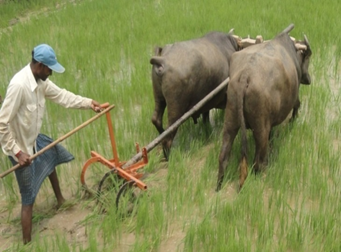
Biasi Rice Cultivator
Biasi rice cultivator developed for rice field cultivation, offering a field capacity of 0.052 ha/h at 80–100 mm depth, with four times higher field capacity than a traditional wooden plough.
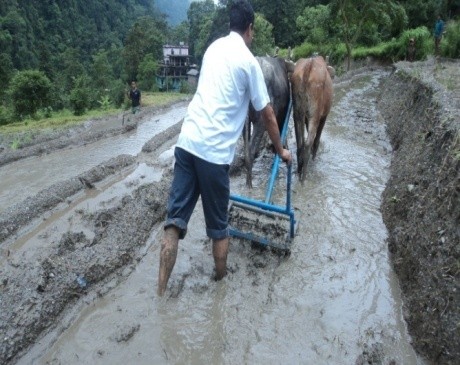
Lightweight improved peg type puddler
Rolling Peg-Type Puddler reduces water percolation losses by increasing the impermeability of the puddled layer. Its lightweight design allows easy turning at headlands and requires less draft, Field capacity: 0.1 ha/h, making it more energy-efficient and cost-effective than the traditional dande (leveler)..
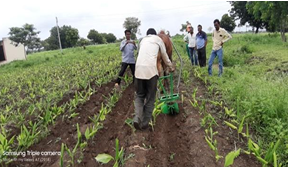
Bullock-Drawn Ridger
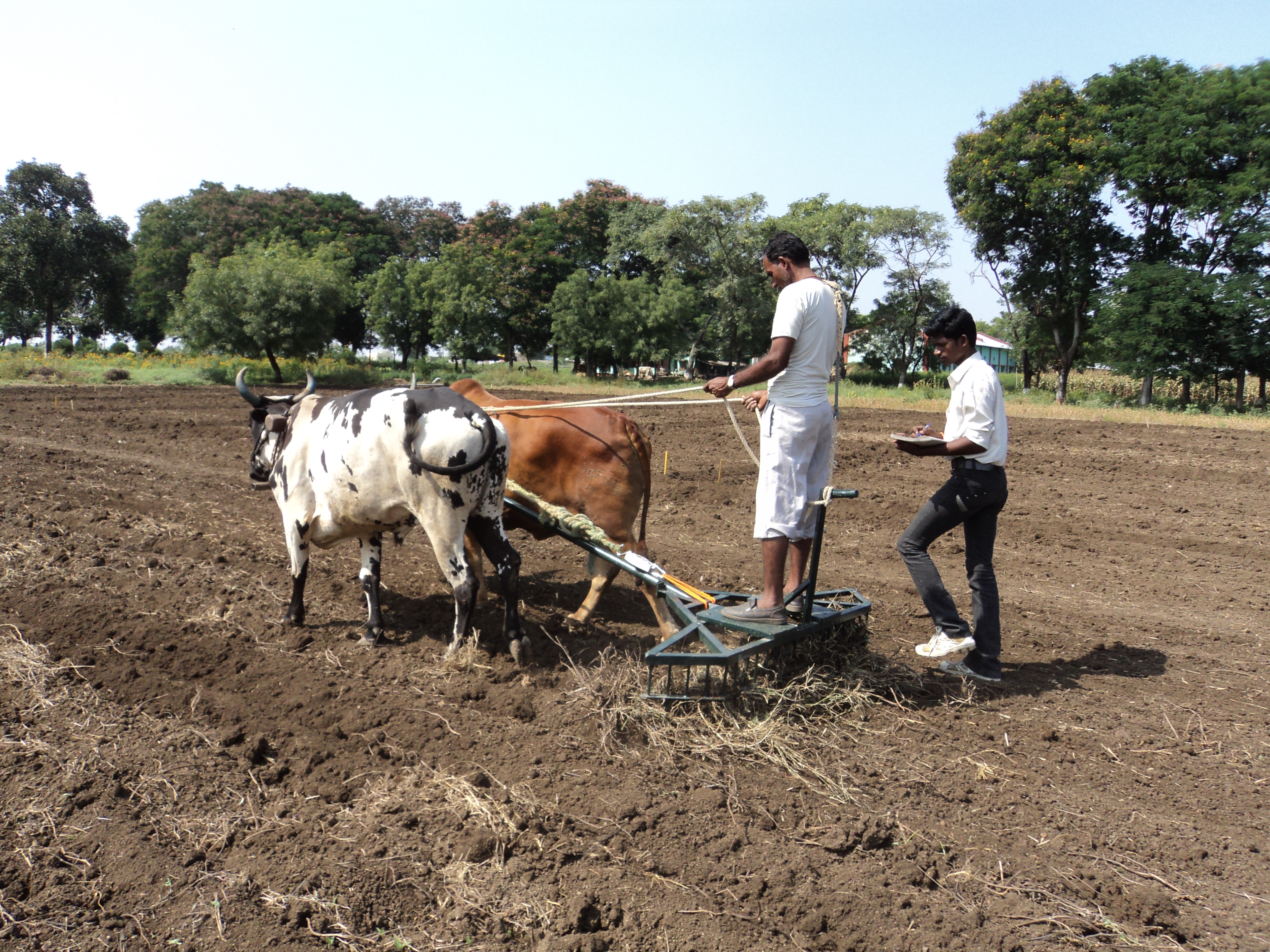
Used for secondary tillage, ridge formation, and earthing-up of crops such as vegetables, sugarcane, and grasses. It facilitates seedbed preparation for sowing and planting, with an effective field capacity of 0.138 ha/h and field efficiency of 83%..
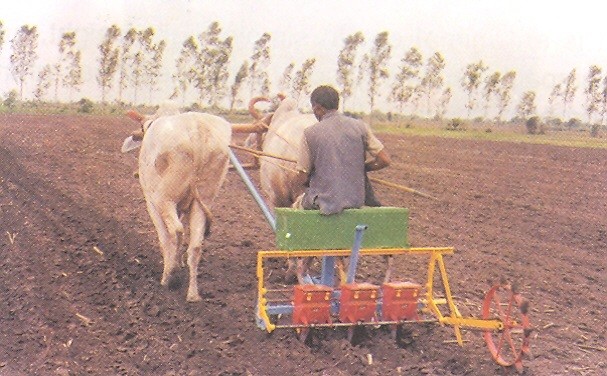
Animal drawn inclined plate planter
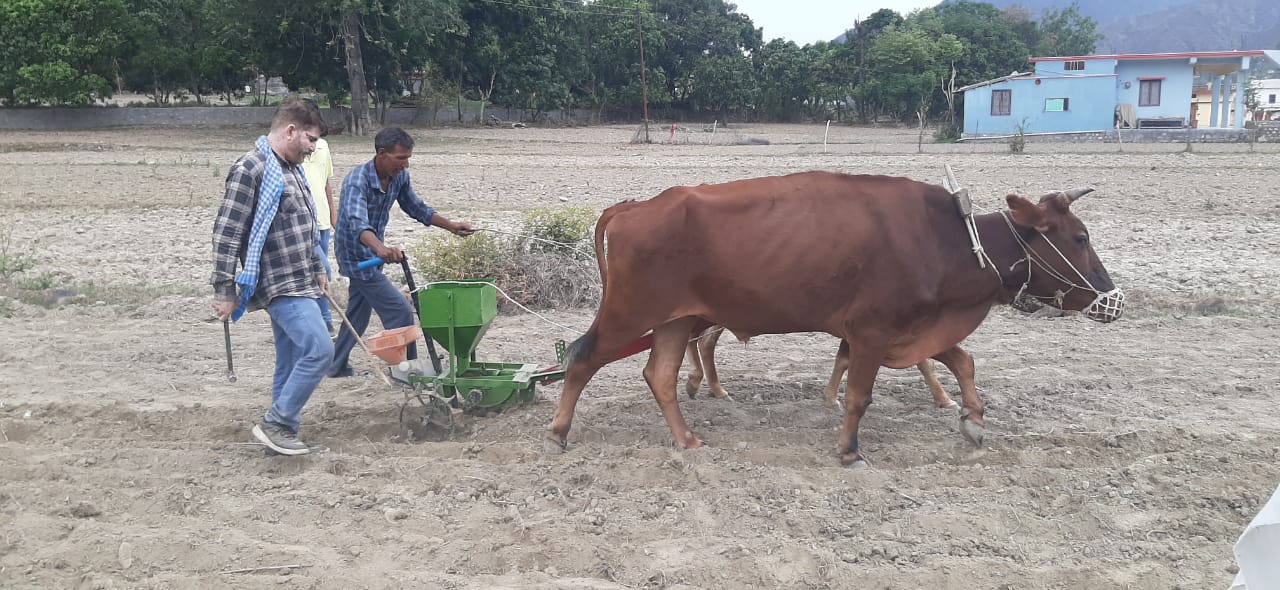
The animal-drawn inclined plate planter is suitable for planting pigeon pea, maize and gram using draught animals. It has a field capacity of 0.12–0.15 ha/h and reduces the operating cost by 34–42% compared with existing planting practices..
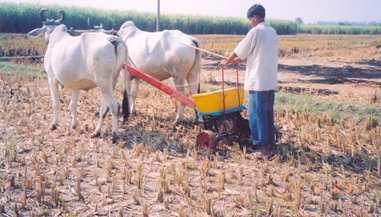
Pant zero till seed-cum-fertilizer drill(1,2 and 3 rows)
An animal drawn zero till drill with one, two and three rows is suitable for sowing of wheat after rice. This opens a narrow slit with minimum soil disturbance. Draught requirements vary from 400-600 N. The field capacity of the implement varies from 0.02 to 0.06 ha/h. One row unit is ideal for narrow terraces of hills, while two rows would be favourable for broader terraces. In case of valleys and plain areas, three row units were recommended. .
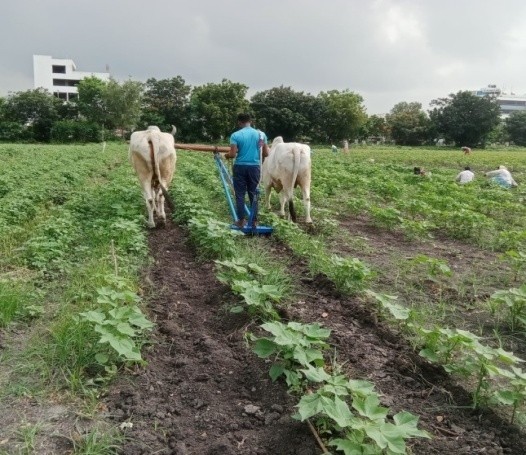
Bullock drawn adjustable interculture implements for chilly and cotton
The bullock-drawn adjustable intercultural implement is used for weed control and soil aeration in cotton and chilli crops.In cotton, it operates at a speed of 2.6 km/h with a field capacity of 0.11 ha/h and power output of 0.44 kW. In chilli, it has a field capacity of 0.06 ha/h and power output of 0.39 kW.
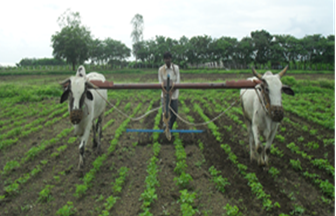
Animal Drawn Three Tyne Ferti Hoe
The animal-drawn three-tyne ferti-hoe is used for intercultural operations in wide-row-sown crops, with three 230 mm hoe blades. It covers 0.198 ha/h and reduces the cost of operation by 50–60% compared with traditional methods.
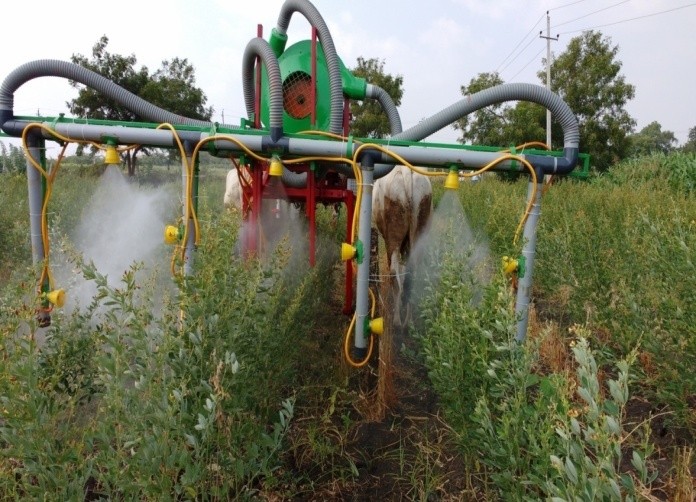
Bullock drawn air mist canopy sprayer
The bullock-drawn air-mist canopy sprayer is used for controlling pests and diseases on the upper and lower surfaces of leaves, plant stems, and other crop canopy surfaces. It is suitable for tall crops such as pigeon pea, red gram, and cotton, with an area coverage of 2.1 ha/h.